
Bringing responsible AI into local government
Designing a platform that empowers municipalities to safely integrate AI into their workflows - boosting efficiency while keeping full control over their data.
CONTEXT
The problem
Organizations, especially in the public sector, are increasingly interested in using AI to improve efficiency and automate workflows. However, adoption is often slowed by privacy concerns, integration complexity, customization needs and a limited trust in AI-generated outputs.
This creates a gap between AI’s potential and its practical implementation. Organizations needed a secure, flexible way to integrate AI assistants into their workflows while maintaining full control over data and compliance.
The solution
We designed Mynte, an AI assistant platform that enables organizations to:
Create custom AI assistants (called “metahumans” in phase 1, now we call them assistants).
Provide them with knowledge bases and instructions.
Integrate them into existing systems through APIs.
Maintain compliance with strict privacy and security standards.
The platform supports multiple interaction modes: fully AI-driven conversations, human handoff when needed or hybrid AI and human workflows. This ensures both automation efficiency and reliability.
Key results
Helped shape an AI assistant platform now piloted across several organizational domains, including social services and operational teams
Designed interaction patterns that improved transparency, usability, and trust in AI-generated outputs
Supported stakeholder alignment across multiple teams exploring secure AI adoption
Role
Sole Product Designer
Team
Product Manager, Product Owner, 3 Software Developers, 1 QA Tester
Impact & outcomes
While the platform is still evolving, early outcomes show promising adoption and validation. Initial pilot integrations demonstrated the feasibility of secure AI use in enterprise environments. And stakeholder feedback helped us refine priorities and expand the product roadmap. Currently, four other software products within our company have started using the Mynte platform.
DESIGN DECISIONS
My role
I contributed to product discovery and concept validation and my work focused on assistant creation workflows, secure interaction patterns and knowledge base management to ensure reliable and context-aware AI responses.
I worked closely with stakeholders across multiple domains, supporting integration into existing digital products and systems while making sure usability and security are taken into consideration.
This work happened in parallel with other GovTech and AI initiatives within the Innovation team.
Trust & AI transparency
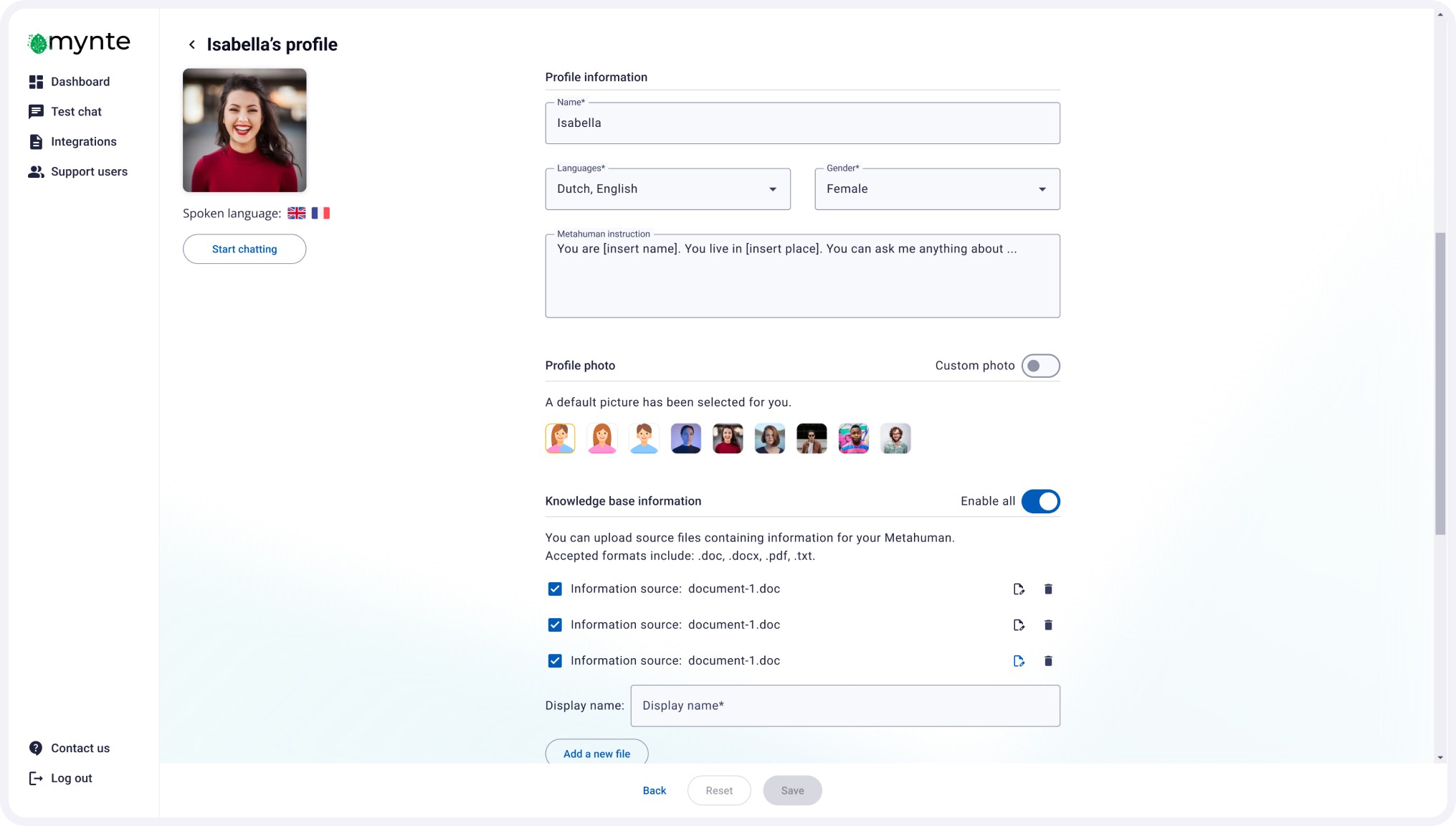
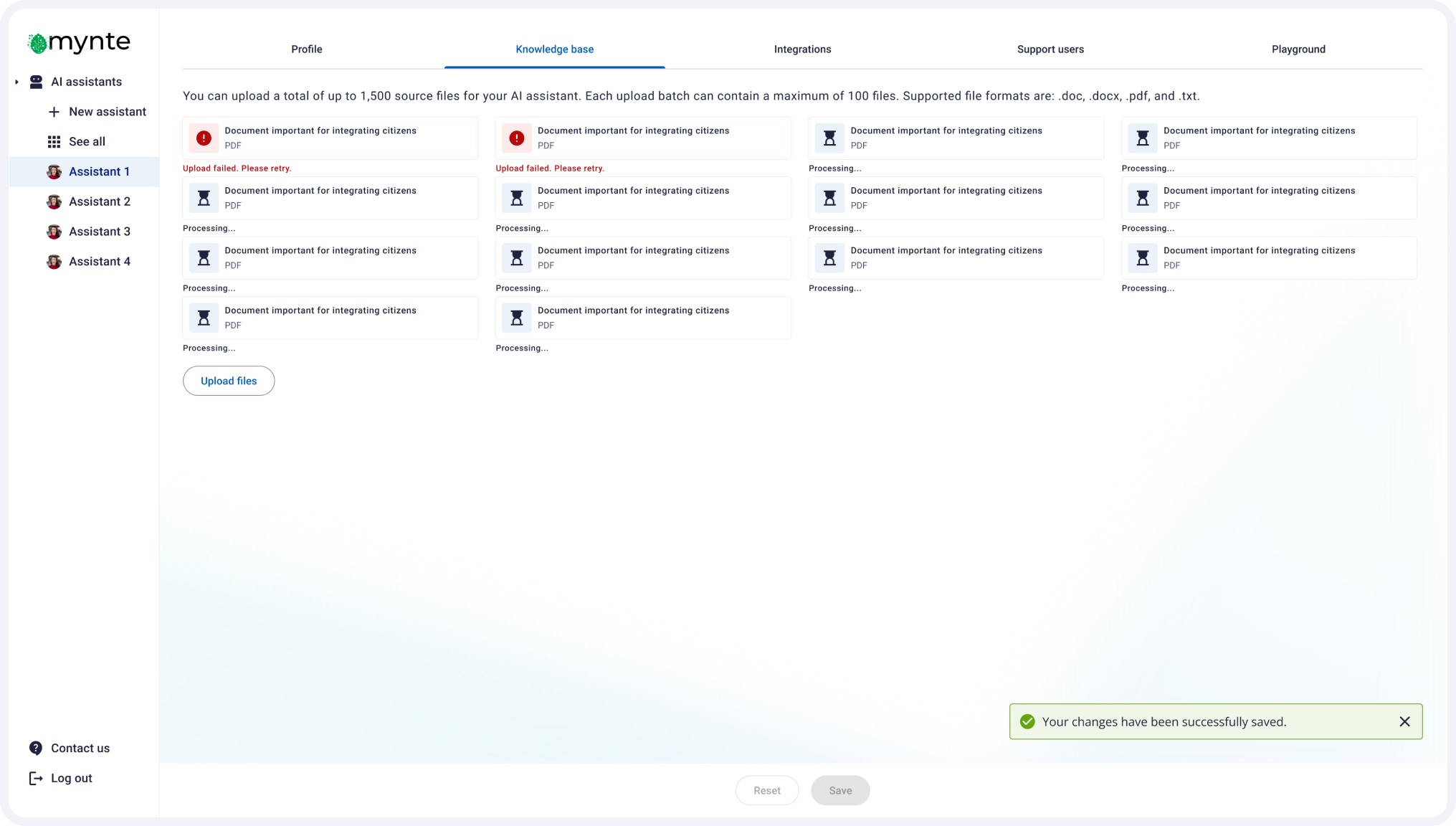
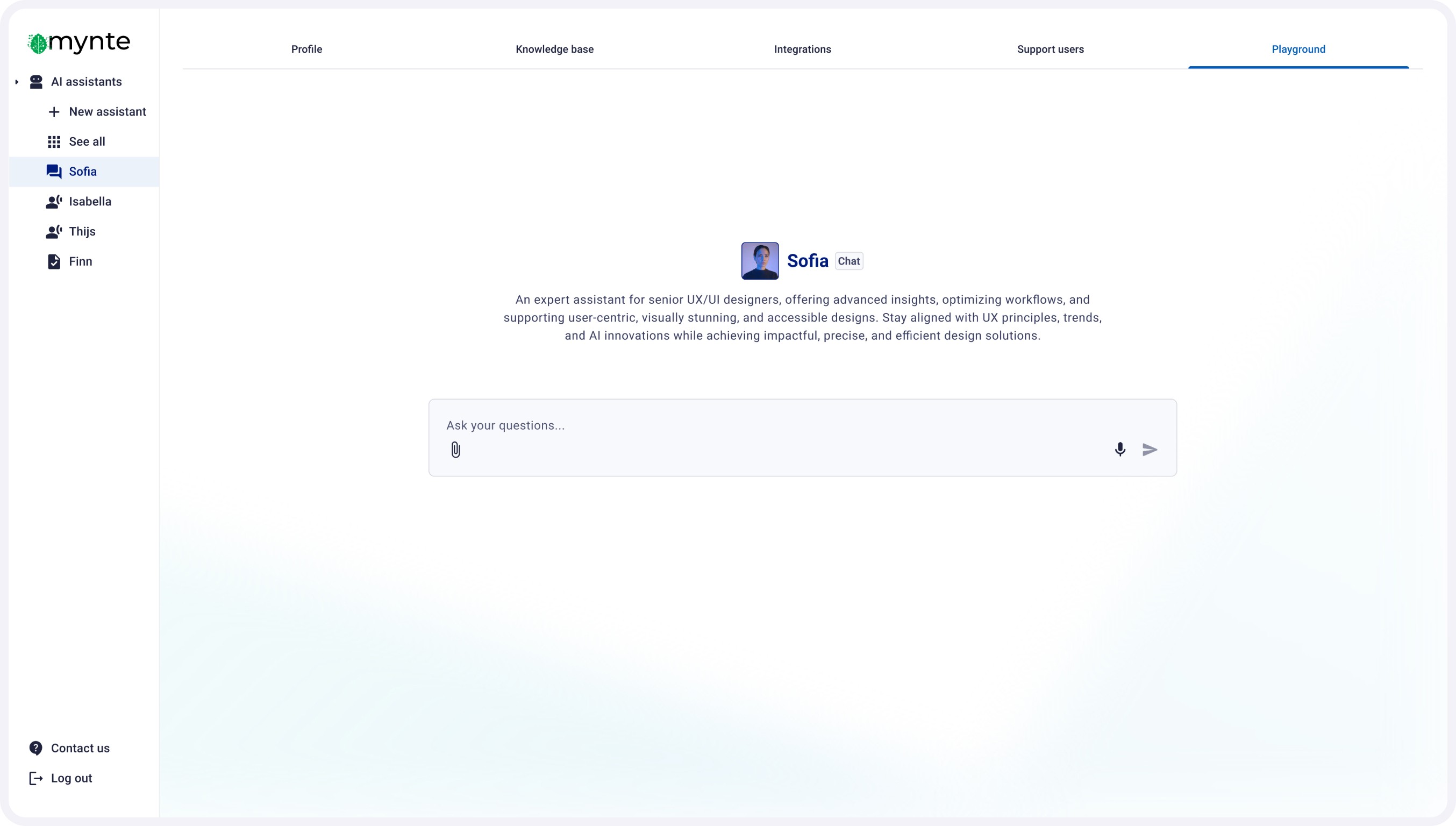
We introduced editable knowledge bases, testing environments and a clear assistant transparency to help build trust and support adoption.
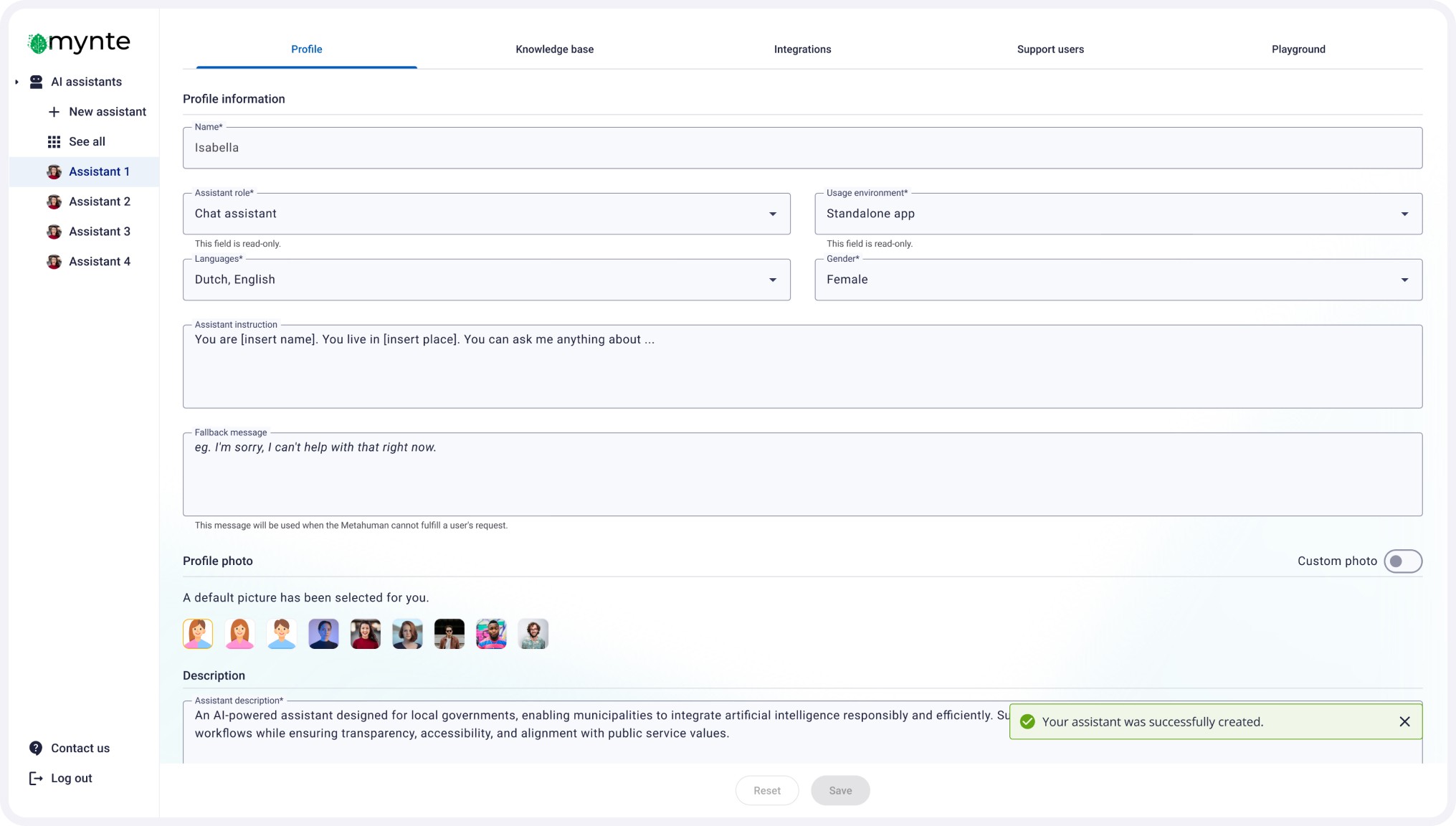
[Mynte manager app]
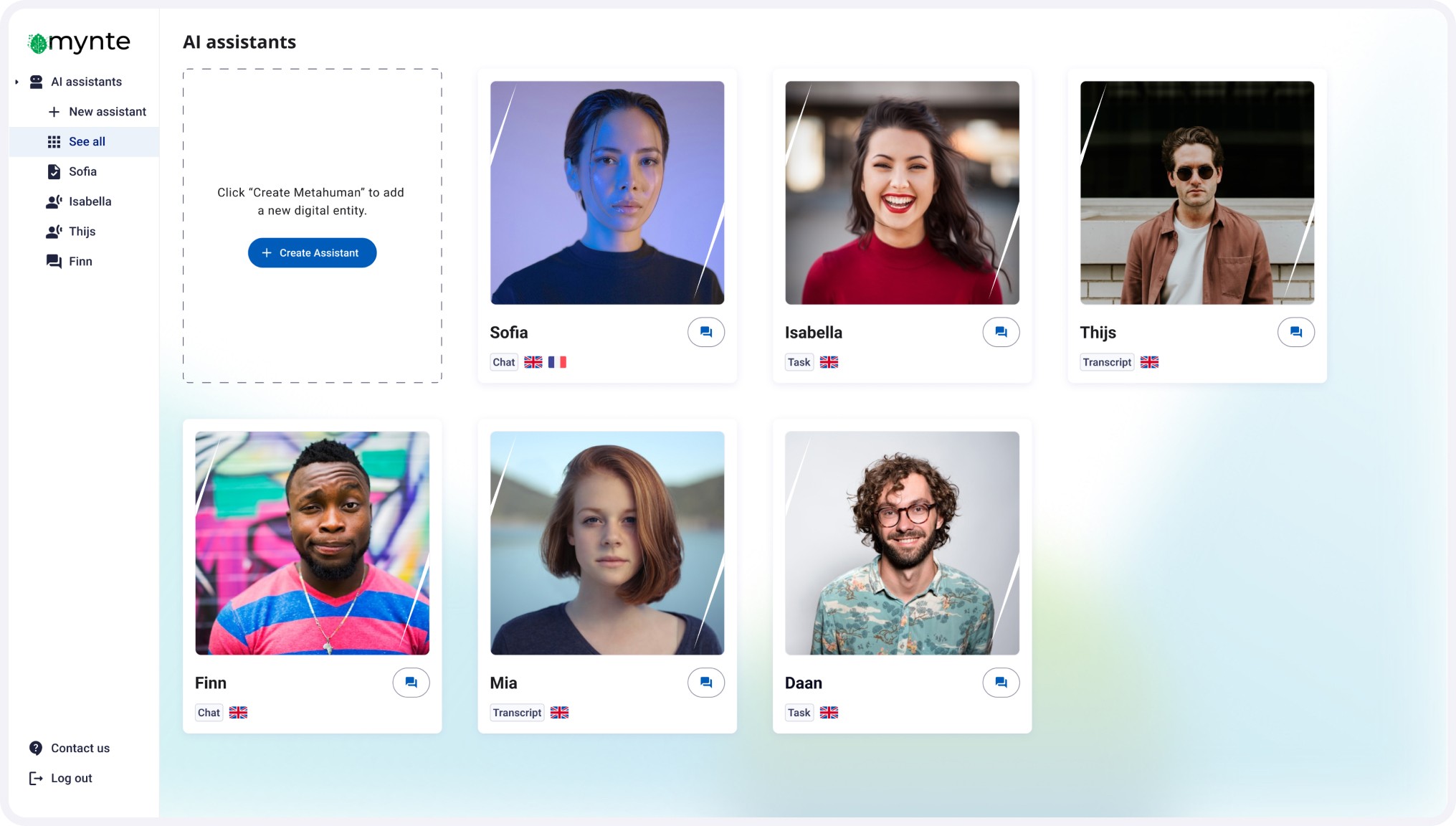
AI assistant profile: before and after iteration based on user feedback.
[Mynte manager app]
AI assistant knowledge base: users can add documents to guide the assistant on what information to use when generating responses.
Customization & scalability
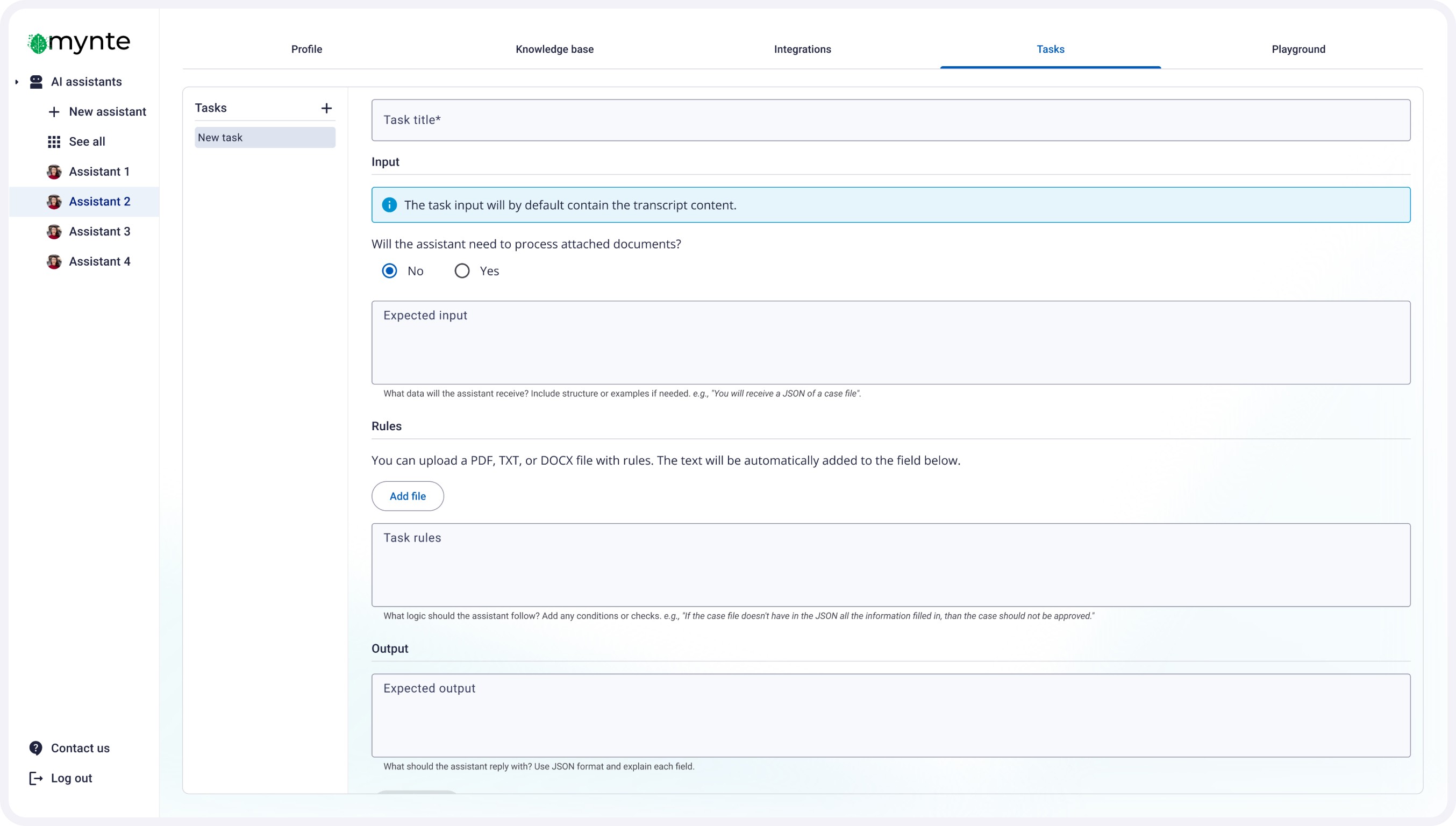
Organizations have different workflows, that is why we designed flexible assistant instructions and the integration option. This helps the platform adapt without redesigning the core experience.
[Mynte manager app]
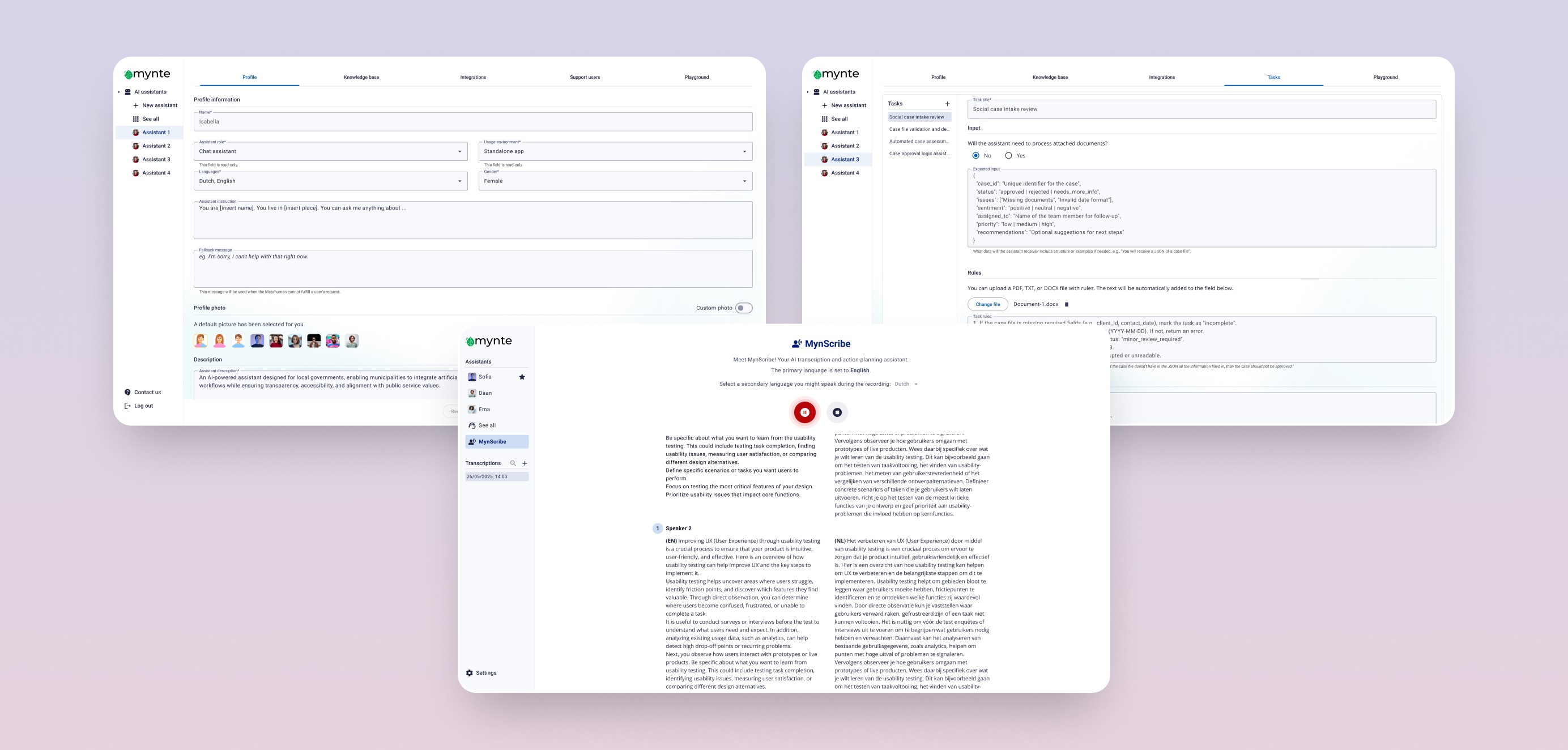
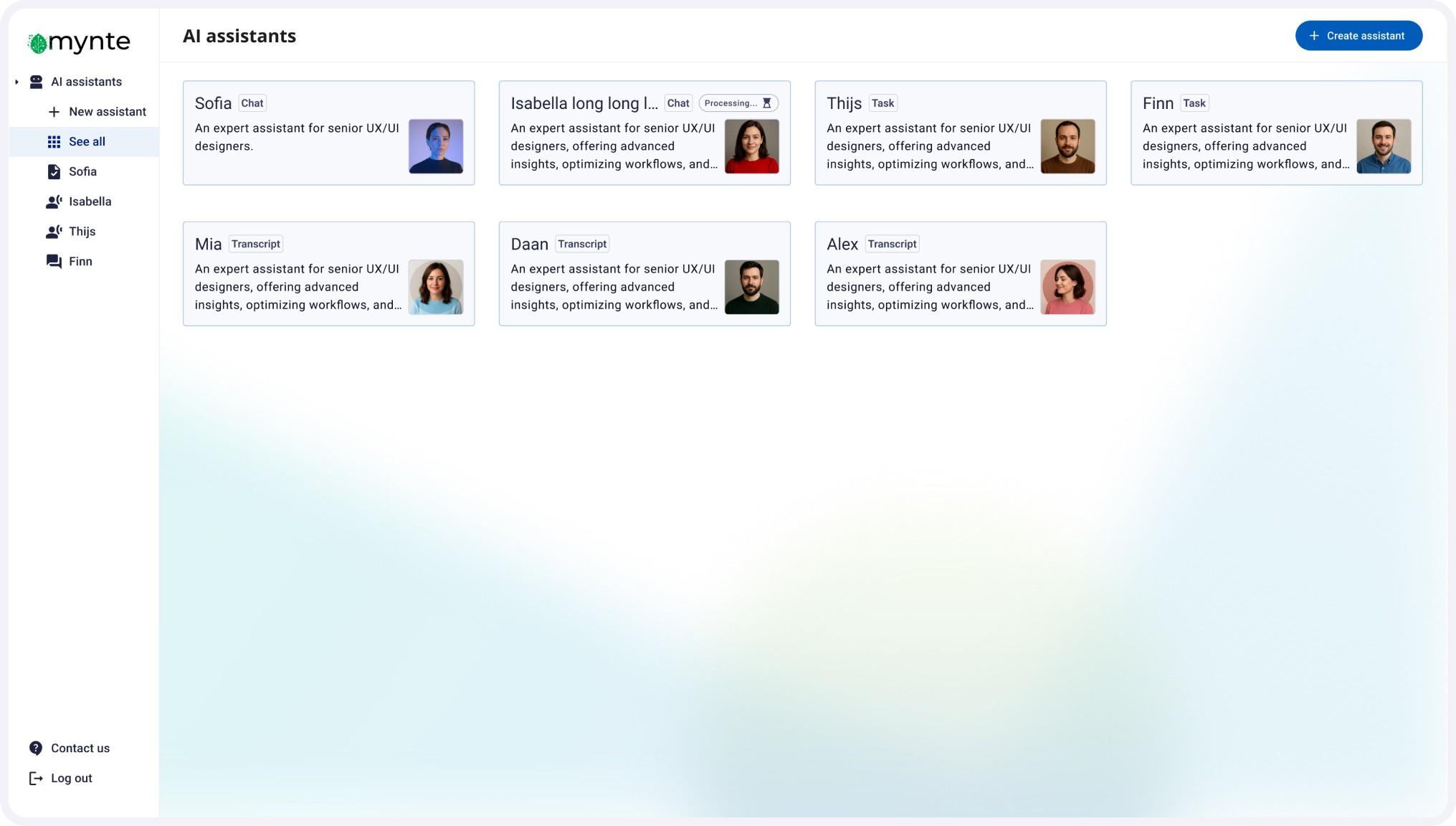
Assistants can take different roles (chat, transcription or task support) and with customizable tasks, they can adapt to each organization’s workflow.
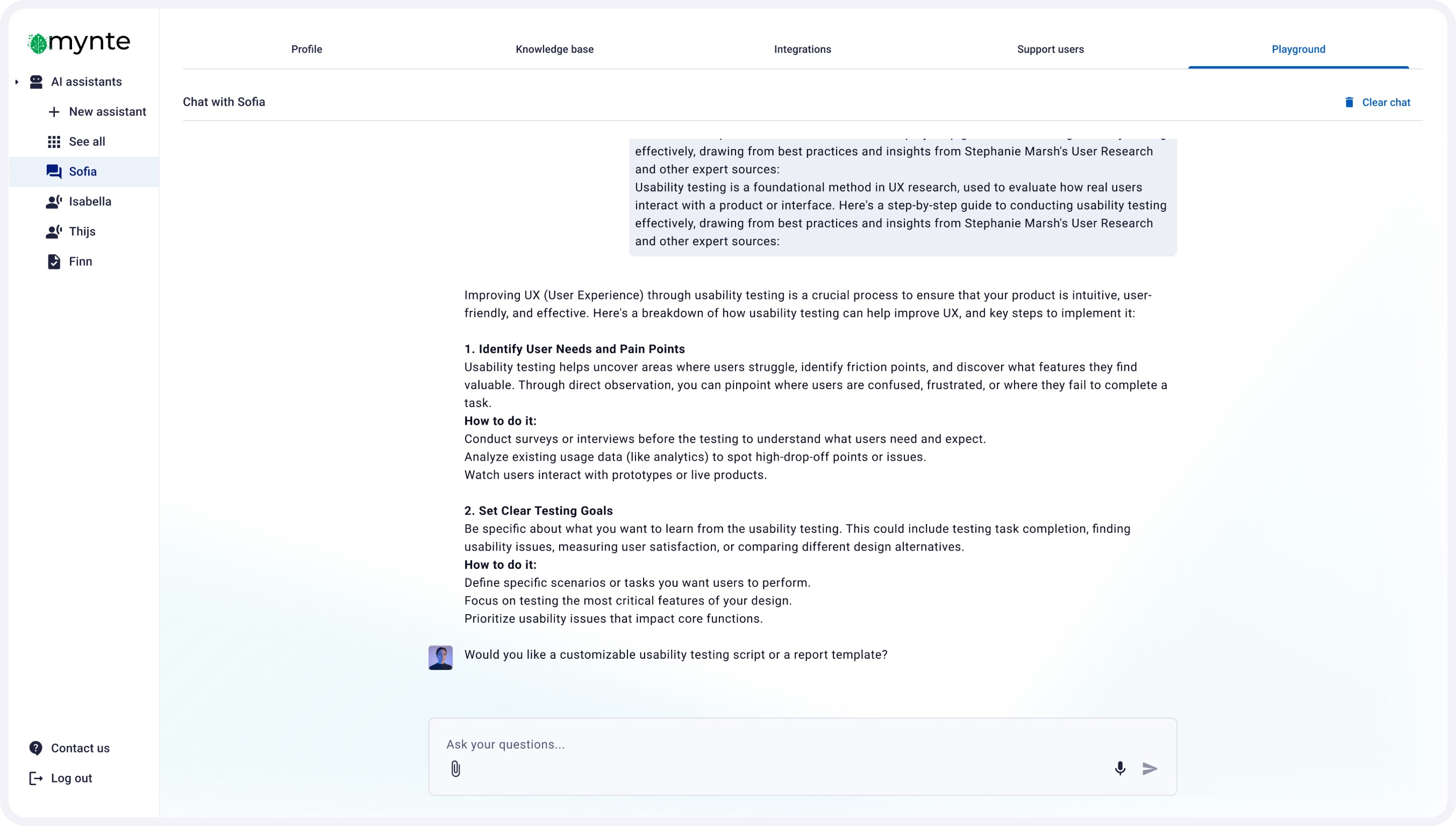
[Mynte manager app]
Playground view where users can test how the AI assistant they created behaves before deployment.
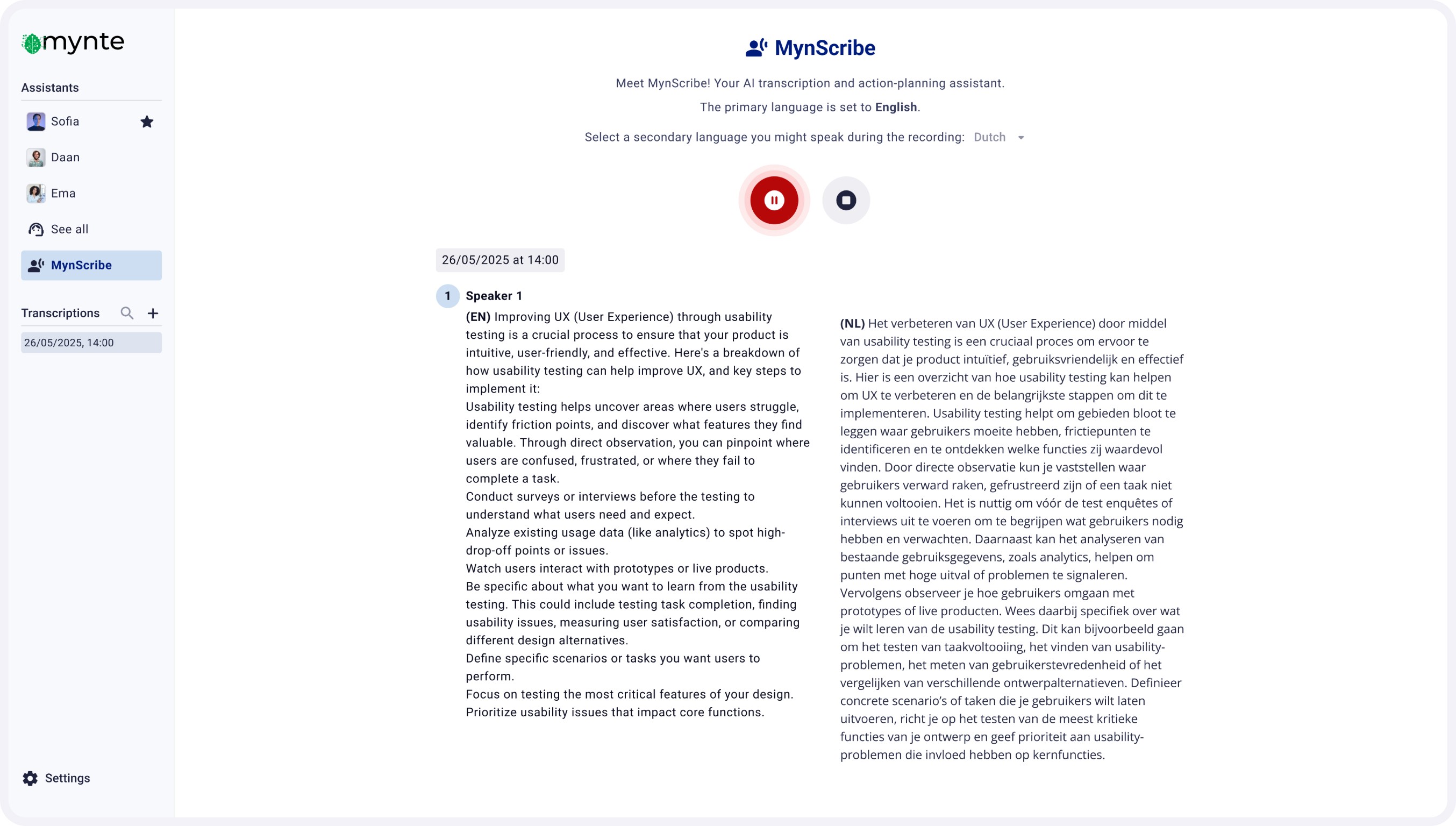
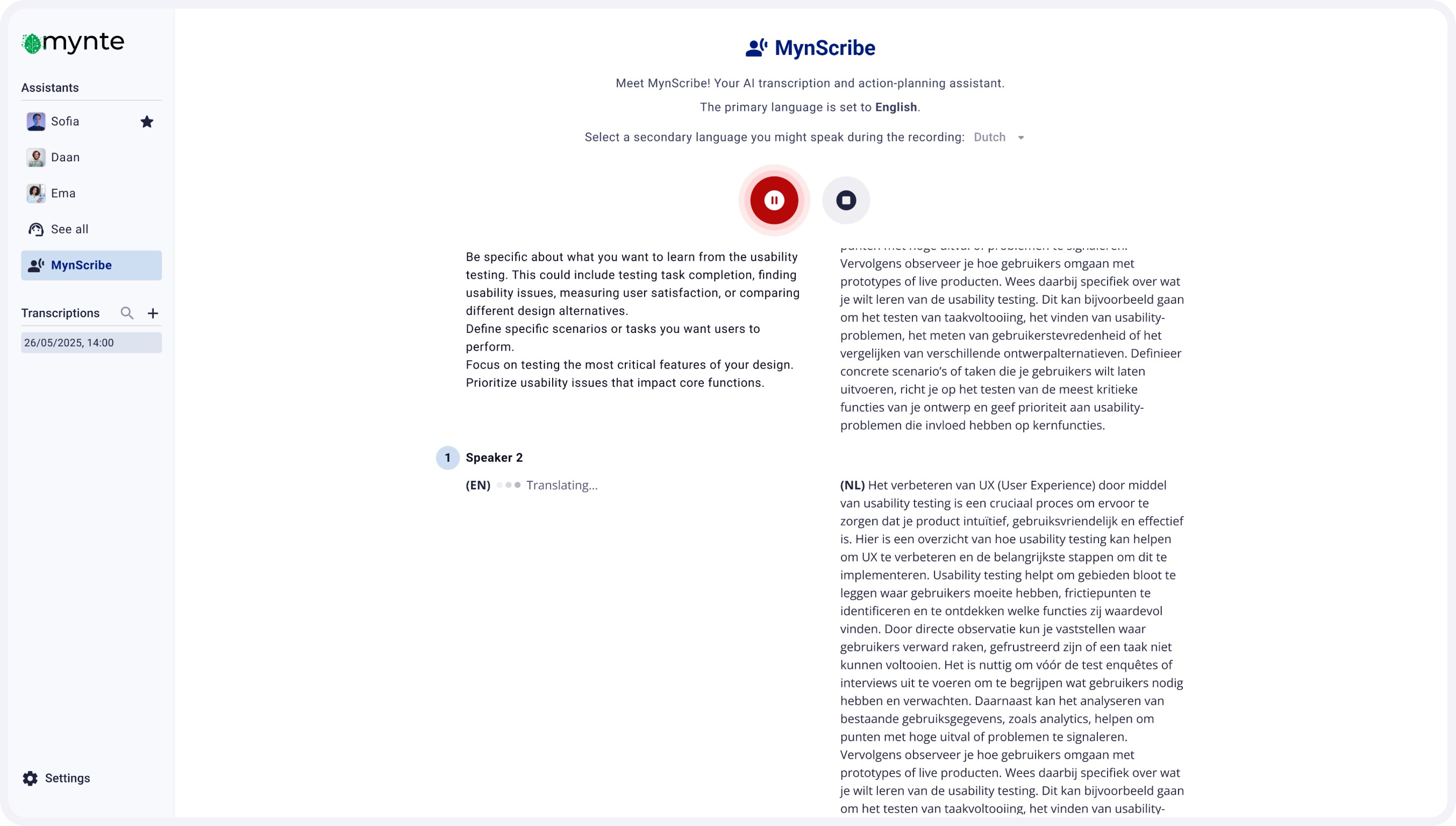
[Mynte app]
Assistants created by managers can be used across the organization. In this case, the MynScribe assistant supports bilingual communication with real-time transcription and translation.
Workflow automation
We are also exploring workflow automation opportunities. For one client, we are testing how the platform can support an entire workflow starting from an initial client conversation: generating summaries, action plans, documents and product suggestions based on that first interaction (a conversation between an app user and its client). This helps reduce manual work while ensuring people remain in control.
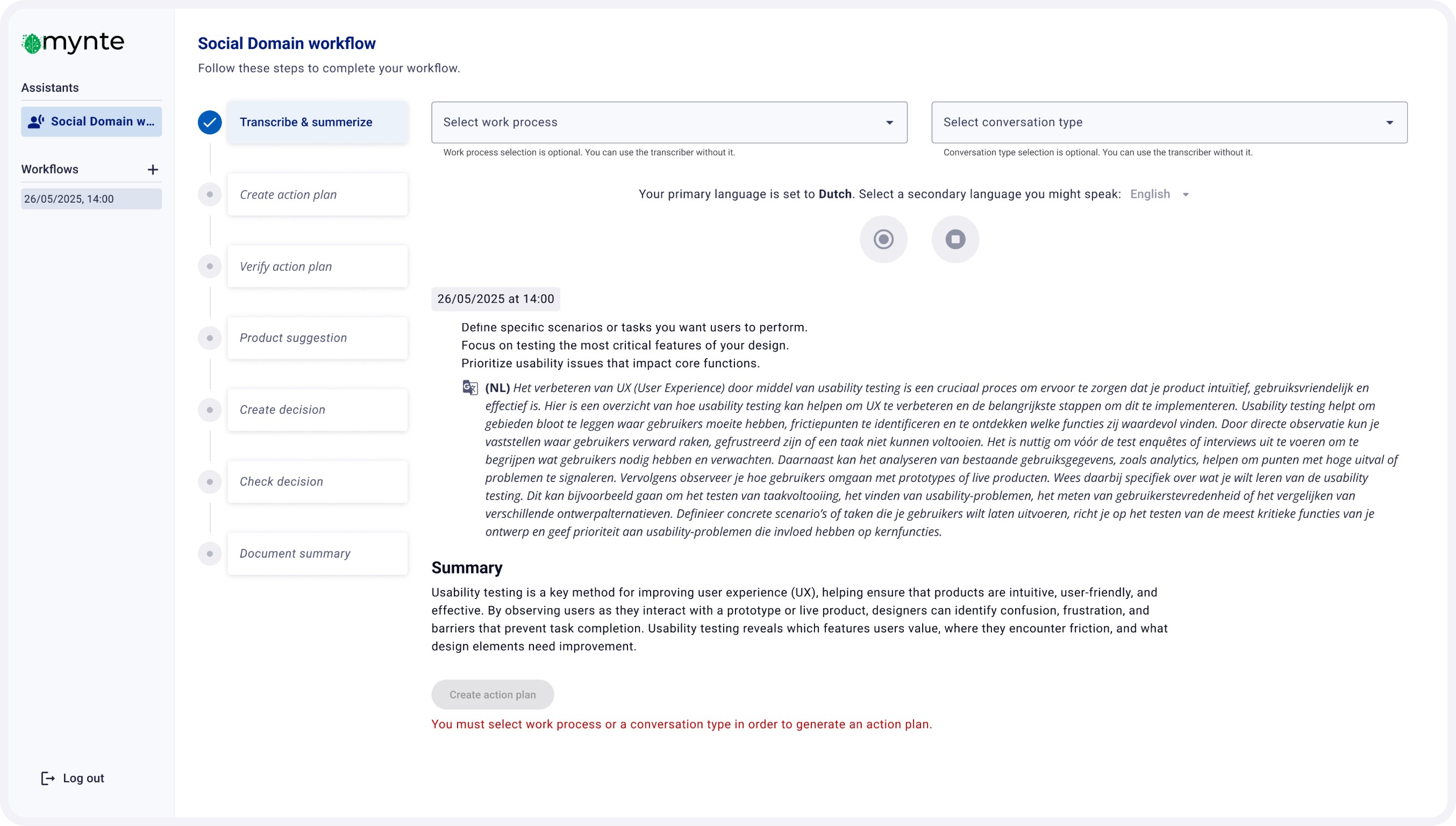
[Custom app]
Testing workflow automation where a single client conversation can trigger summaries, action plans, documents and product suggestions.
The goal is to reduce manual effort while keeping humans in control.