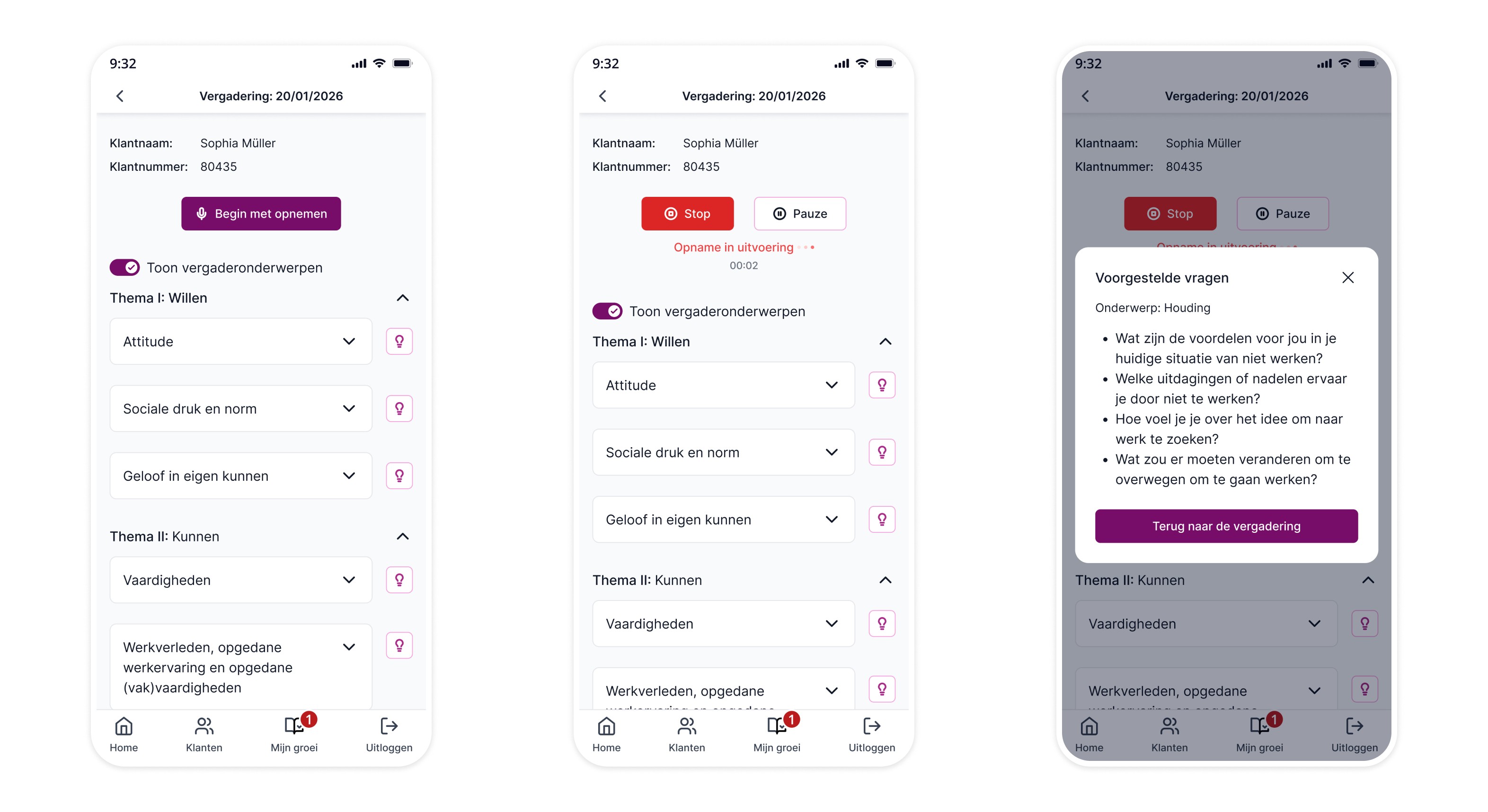
AI-assisted coaching platform
Presenting an AI-assisted coaching platform helping work coaches guide clients in unemployment or reintegration through structured action plans.
CONTEXT
The problem?
Work coaches needed a simpler way to manage client conversations, action plans, but also the progress across complex coaching sessions with their clients.
Our solution
We designed an AI-assisted coaching platform to simplify conversations, automate documentation and help work coaches track client progress more effectively.
Project overview
Sidekick is an AI-assisted coaching platform designed to support work coaches in managing client conversations, generating action plans and improving coaching quality through structured feedback.
The product combines AI transcription, conversational analysis and workflow automation. Why? To help coaches focus on meaningful interactions during their conversation with the clients, rather than administrative tasks.
The initial phase (December 2025–February 2026) focuses on validating the assumptions made while designing the mobile application’s user flows through usability testing.
After validating the MVP, we’ll focus on adapting the desktop version to support coaches’ daily workflows across devices and platforms.
The challenge
Work coaches regularly manage multiple clients and complex documentation.
At the moment, much of this work is still manual.
Notes and action plans are created after face to face meetings.
Insights from conversations can be fragmented or lost (everything happens manually).
Preparation for meetings requires navigating multiple systems.
The opportunity
An AI-assisted platform to:
📝 Capture conversation insights automatically - through recordings and transcripts.
📋 Generate structured client profiles and action plans - based on existing client types and specific available plans.
✅ Provide actionable feedback to coaches - to help them improved each meeting.
🧑🏻💻 Fit naturally into existing workflows.
DISCOVERY
Mapping the coach’s workflow
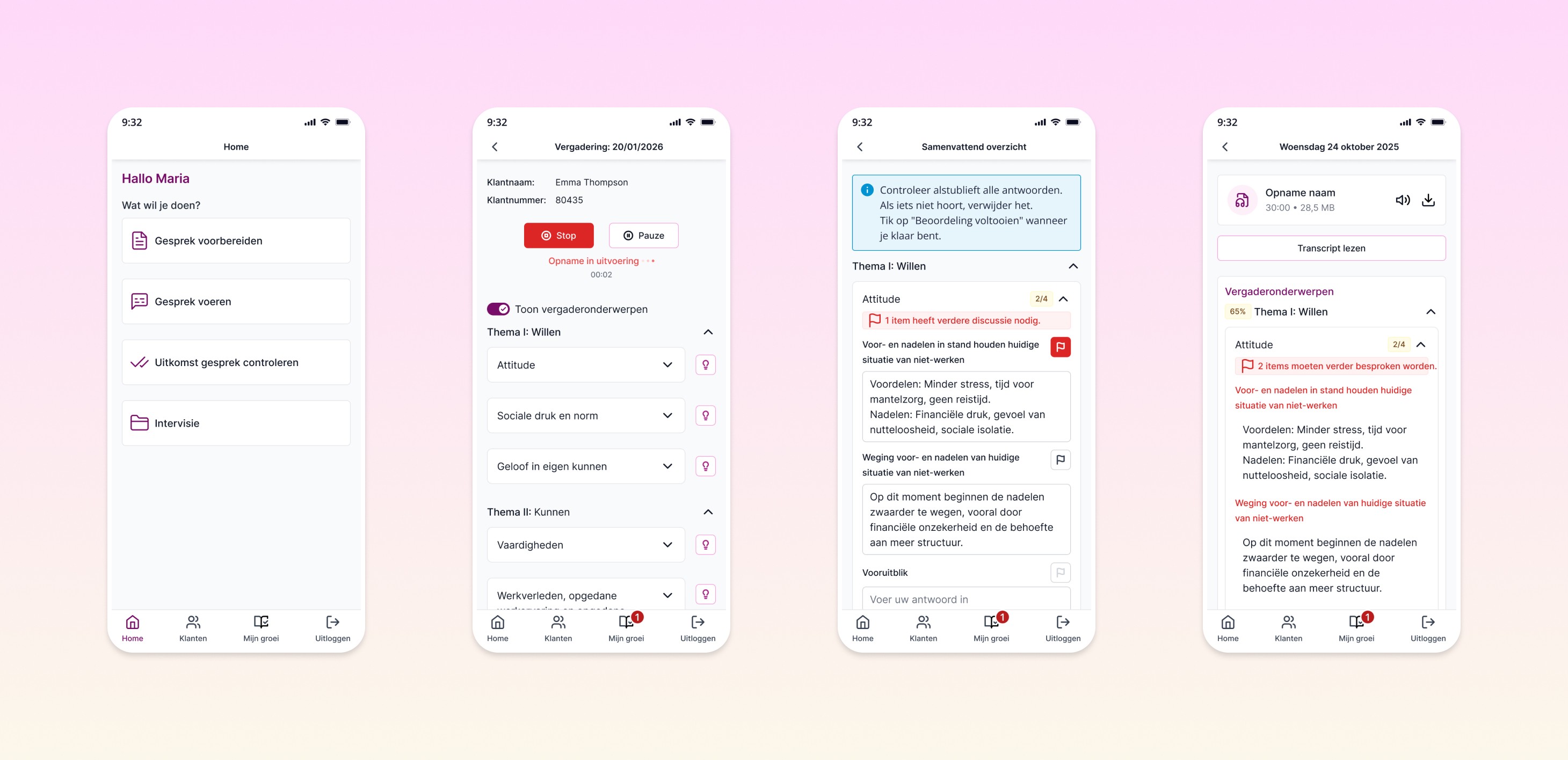
Early discussions with stakeholders revealed three key processes the platform needed to support:
1️⃣ Client meetings (preparing, recording, generating and reviwing profile summaries, updating the client profile)
2️⃣ Coaching feedback (evaluating the coach communication style, monitoring coaching effectiveness, providing performance insights)
3️⃣ Case collaboration (TBD)
USABILITY TESTING
Usability validation before development (starting December 2025)
Before starting the development phase, we wanted to validate the mobile experience with real users.
I contributed to:
Designing scenarios based on actual coaching workflows and creating prototypes in Figma.
Defining realistic testing tasks and validating them with stakeholders.
Structuring test flows and running an unmoderated usability testing session using Lyssna.
Aligning stakeholders on testing goals.
Usability testing insights
Status: 🛠️ usability testing is still in progress as responses continue to come in.
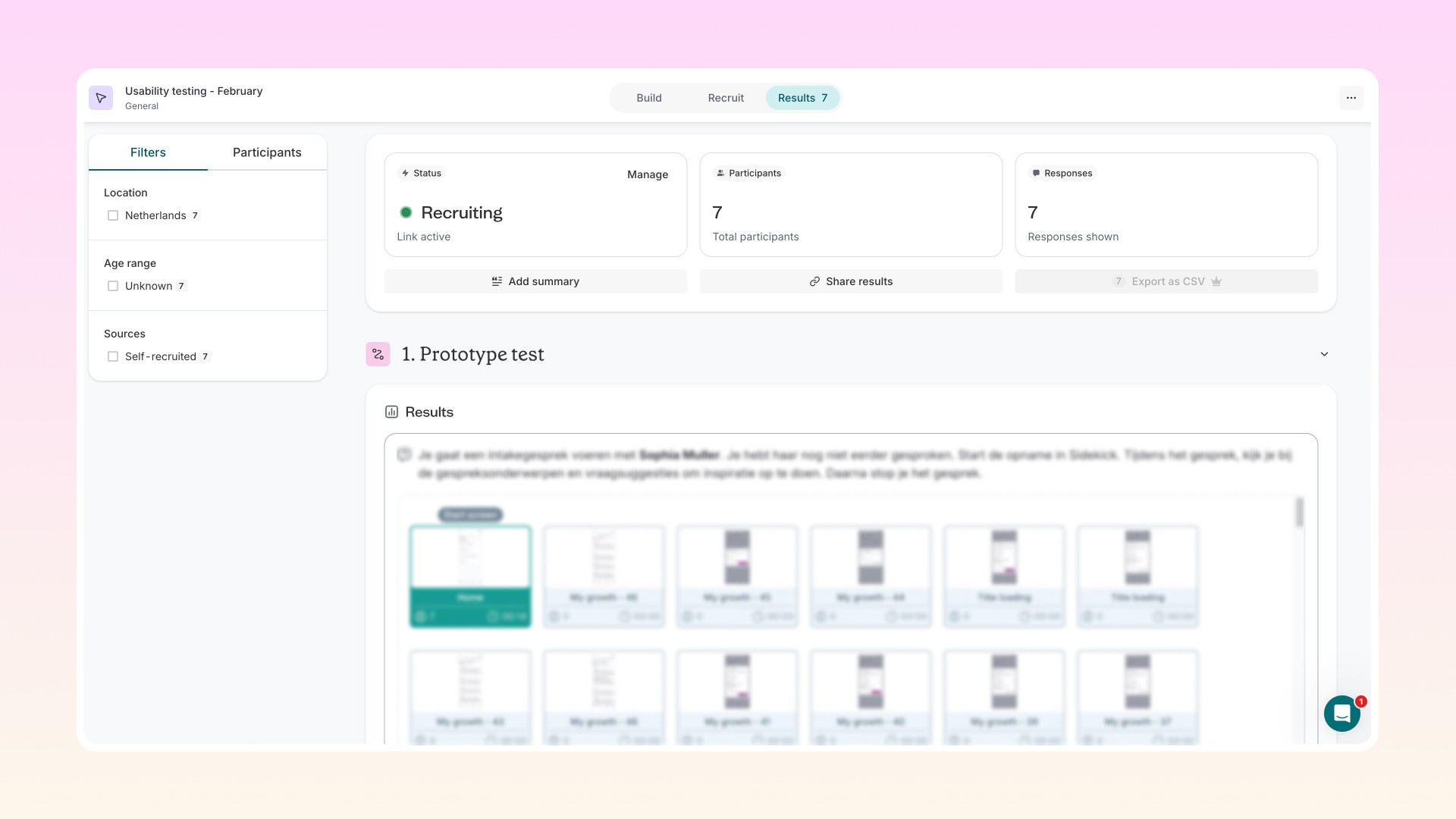
Unmoderated usability testing currently in progress.
DESIGN DECISIONS
Supporting AI-assisted documentation without compromising user autonomy
AI-generated meeting notes used to complete client profiles will remain fully editable. This behaviour will allow coaches to review, refine and validate content before finalizing documentation.
As the AI system matures and better understands when topics are sufficiently explored, this interaction model will be revisited and refined.
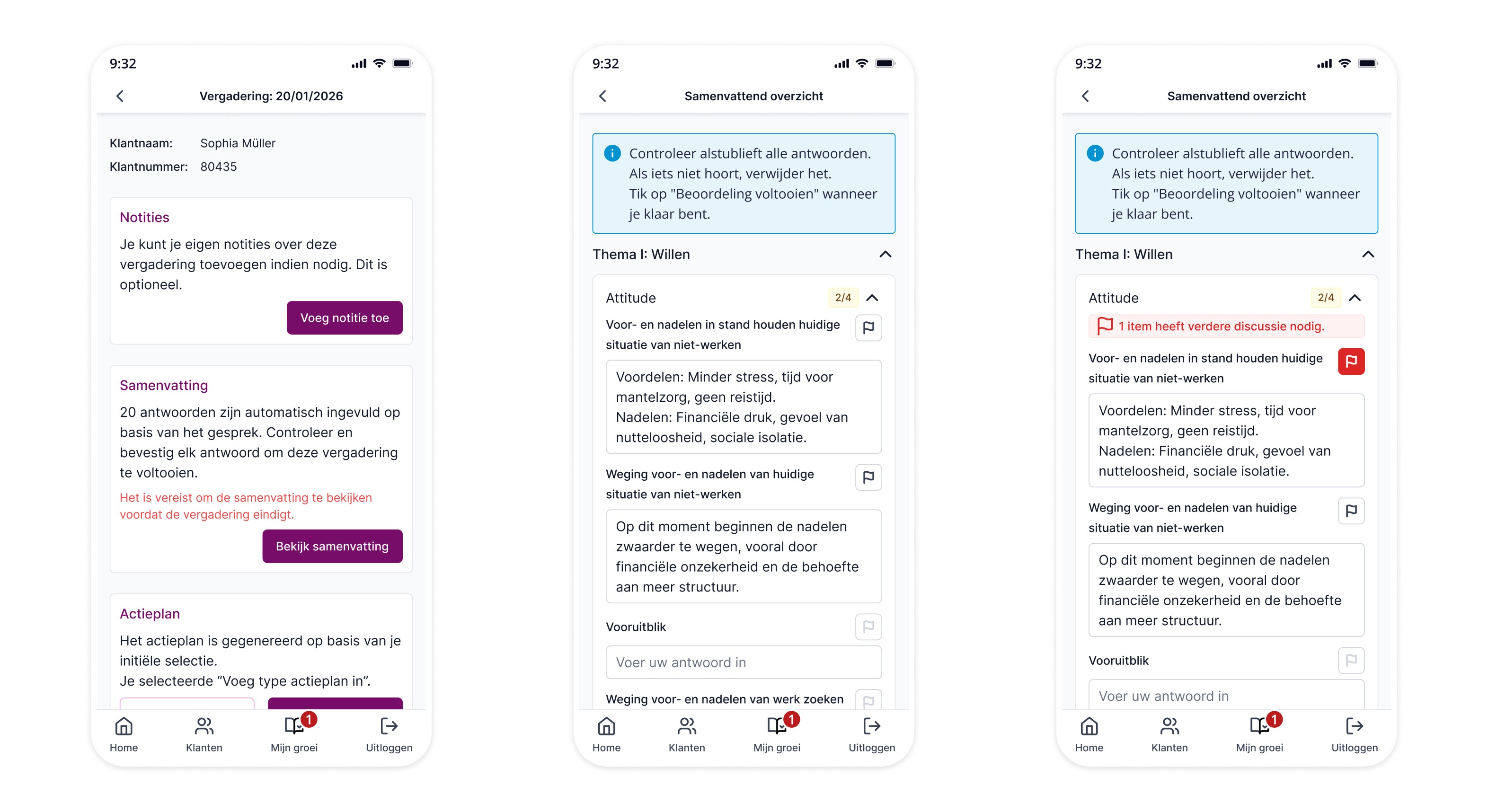
Flexible preparation workflows
Coaches can prepare for meetings when needed, while still having access to key information during conversations.
This flexibility ensures the platform supports different coaching styles rather than enforcing rigid preparation steps.
As usage patterns become clearer over time, this workflow may evolve to better align with real coaching practices and emerging needs.